
Case study · Real Estate
How Canadian residential appraisers turned source documents into structured, review-first appraisal reports
Real estate appraisal · Residential appraisers and firms · Canada · browser-based appraisal report editor with AI-assisted extraction
01
The problem
A residential appraisal pulls facts from many sources: assessment reports, MLS sheets, inspection notes and photos, and comparable sales. Moving those details into a structured report by hand is slow, and a single wrong value can undermine the conclusion.
Any automation had to keep the appraiser in control. Nothing could enter the report unless the appraiser accepted it, and value conclusions had to stay the appraiser's call.
02
What we built
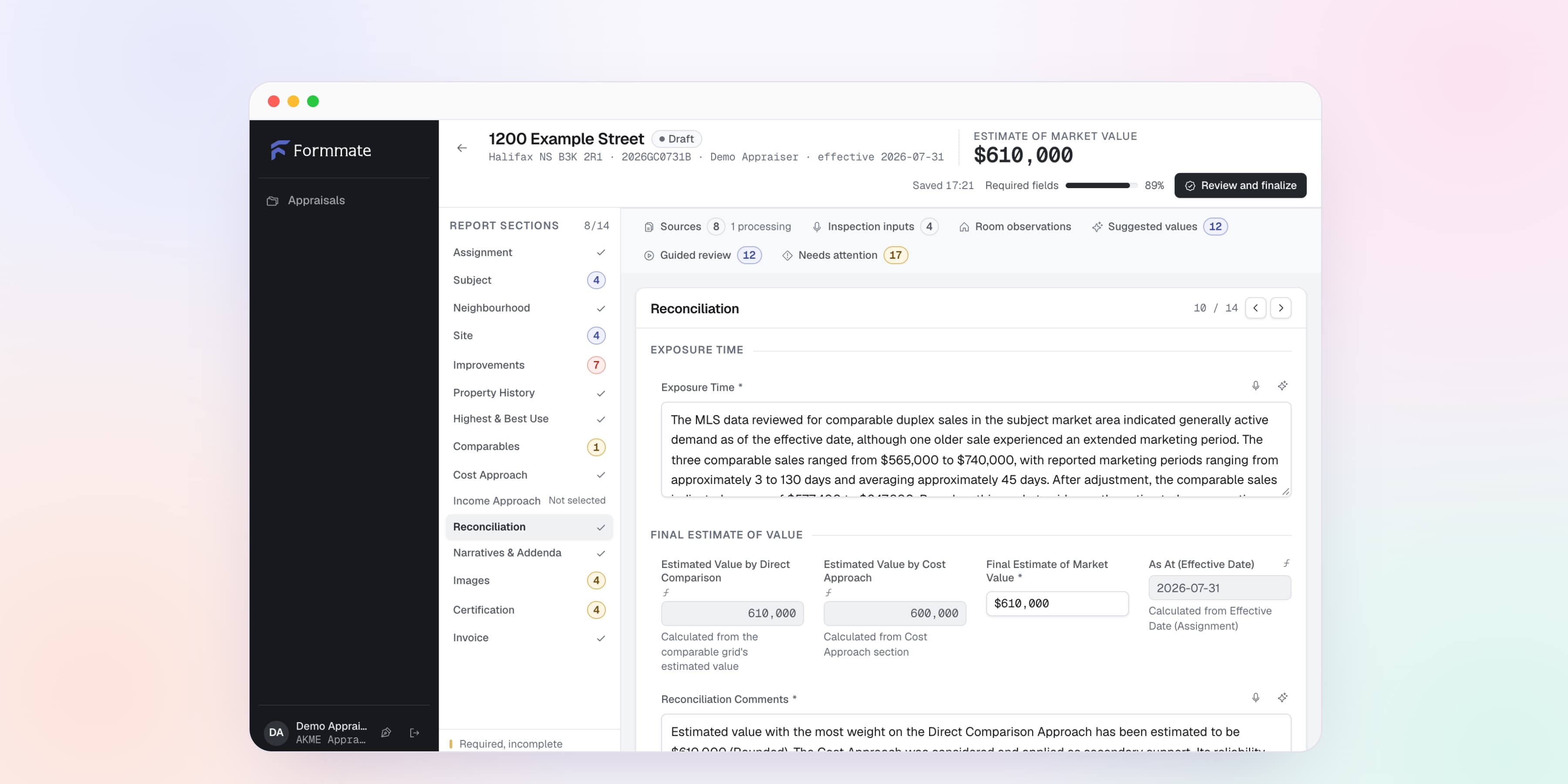
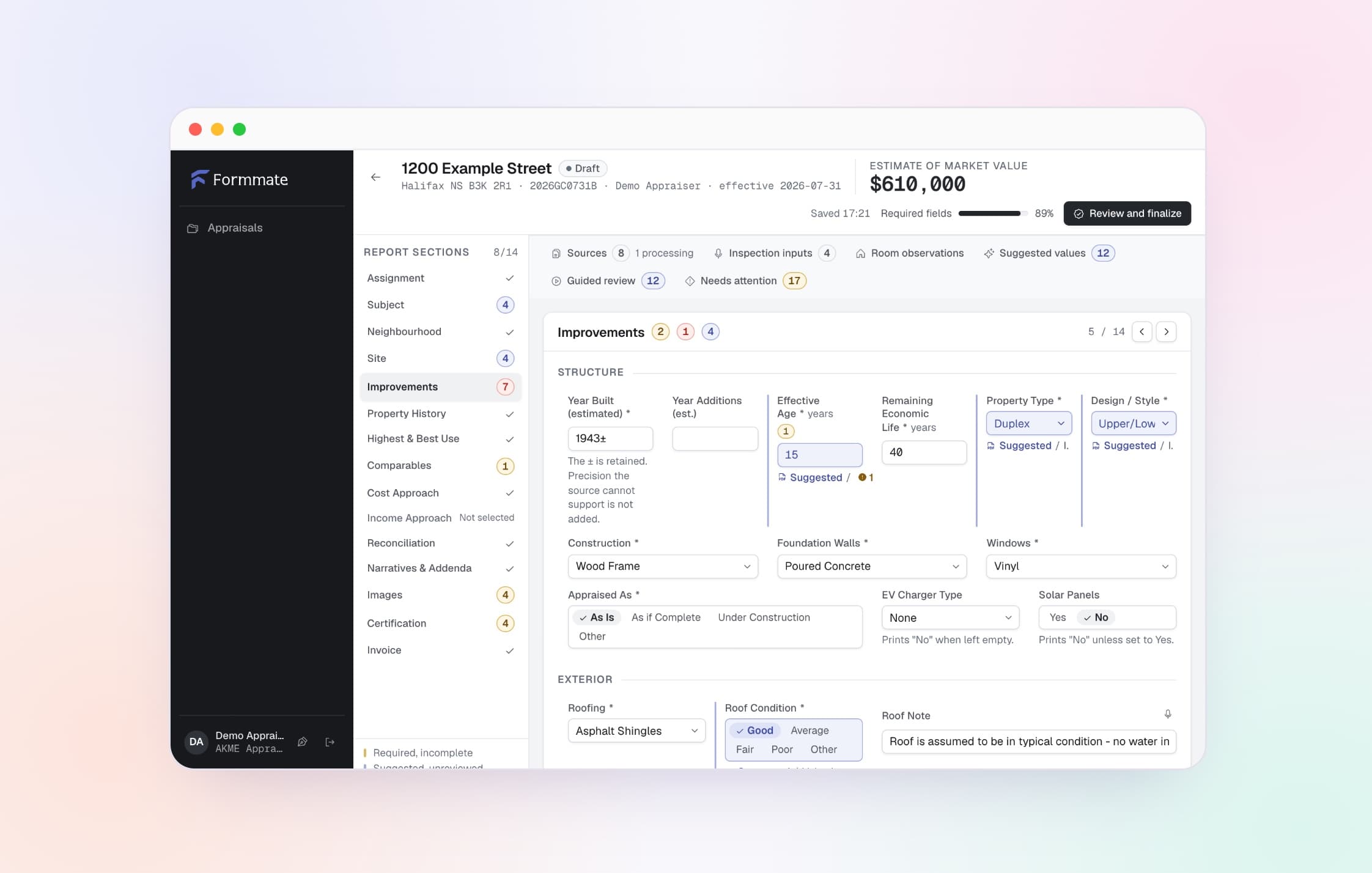
A browser-based appraisal editor organised into 14 report sections, from Assignment and Subject through Comparables, Cost Approach and Reconciliation to Certification and Invoice, with a required-fields meter and a guided review before finalizing.
Document intake that extracts text, sections and photos from uploaded PDFs and images (with OCR for photos and handwriting) and proposes values with their source, page and excerpt. The appraiser accepts, edits or rejects each suggestion, and value conclusions, adjustments and reconciliation are never proposed.
Inspection inputs (notes, voice transcription, room observations and photos), a comparables grid, AI-drafted narratives, organisations with roles and invitations, email-code sign-in, and server-side finalization rules with signature profiles.
03
The result
Report data entry
Re-typed from documents
Suggested with source & page
Silent critical errors
53 on first test run
0 on the final build








Running into something similar?
We'll tell you in one call whether it's worth automating, and we'll say so if it isn't.